
Essential Train Etiquette Tips for Tourists in Asia
Train travel is one of the easiest ways to get around Asia, but it also comes with expectations that may differ from what many travelers are used to. Trains are shared public spaces, and behavior is guided less by enforcement and more by asian etiquette. Knowing what is expected helps you travel comfortably and avoid drawing unnecessary attention.
Last updated: 30.11.2025
Last updated: 30.11.2025
Noise and phone use

Asian trains are generally quiet, even on long-distance routes. Conversations tend to be brief and spoken at a low volume, and many passengers choose not to talk at all during the journey. Phone calls are usually avoided, and when they are necessary, travelers often keep them short or step into the space between carriages to avoid disturbing others.
Music, videos, and games should always be used with headphones and kept at a low volume. Many passengers silence notification sounds completely, especially on high-speed and intercity trains. As a general rule, if people seated nearby can clearly hear your device, the volume is considered too loud.
Music, videos, and games should always be used with headphones and kept at a low volume. Many passengers silence notification sounds completely, especially on high-speed and intercity trains. As a general rule, if people seated nearby can clearly hear your device, the volume is considered too loud.
Boarding, queues, and movement on platforms

Train platforms in Asia are typically well organized, with clear markings showing where passengers should stand and exactly where doors will open. These markings are not decorative — they are actively followed, especially in busy stations and during peak travel times. Passengers line up in advance and wait calmly for the train to arrive, following train etiquette in Japan and across Asia that locals take seriously even without posted rules.
When doors open, those exiting always have priority. Boarding begins only after the carriage has fully cleared, allowing movement to stay smooth and efficient. Standing directly in front of doors, ignoring queue lines, or pushing forward disrupts this system and is widely viewed as impolite, even if no one says anything directly.
When doors open, those exiting always have priority. Boarding begins only after the carriage has fully cleared, allowing movement to stay smooth and efficient. Standing directly in front of doors, ignoring queue lines, or pushing forward disrupts this system and is widely viewed as impolite, even if no one says anything directly.
Seating rules and priority areas

On long-distance and high-speed trains, seating is assigned. Your ticket shows the exact carriage and seat number, and you are expected to remain in that seat for the duration of the journey. Sitting elsewhere, even if a seat appears empty, can lead to confusion when the assigned passenger boards later. Priority seating is clearly marked for elderly passengers, pregnant women, and people with disabilities, and should remain available whenever possible.
When traveling with Tours to Asia, itineraries are designed around the fastest rail connections available, combined with efficient transfers and carefully selected hotels. This approach minimizes unnecessary changes and ensures a smooth, well-paced journey from start to finish.
When traveling with Tours to Asia, itineraries are designed around the fastest rail connections available, combined with efficient transfers and carefully selected hotels. This approach minimizes unnecessary changes and ensures a smooth, well-paced journey from start to finish.
Personal space in crowded trains

Crowding is common on urban and commuter trains, particularly during morning and evening rush hours. Even in tight conditions, passengers make an effort to reduce inconvenience to others and move as little as possible.
Backpacks are often removed and held in front of the body or placed near the feet. Arms are kept close, and wide movements are avoided. When standing close to others, people usually face forward rather than directly toward another passenger, which helps maintain a sense of personal space even when physical distance is limited.
These small adjustments are widely understood and appreciated, making crowded rides more comfortable and orderly for everyone onboard.
Backpacks are often removed and held in front of the body or placed near the feet. Arms are kept close, and wide movements are avoided. When standing close to others, people usually face forward rather than directly toward another passenger, which helps maintain a sense of personal space even when physical distance is limited.
These small adjustments are widely understood and appreciated, making crowded rides more comfortable and orderly for everyone onboard.
Food, drinks, and cleanliness

On long-distance trains, eating is usually allowed and sometimes expected, especially when journeys last several hours. On commuter trains and metro systems, eating may be discouraged or not permitted at all. Regardless of the rules, strong-smelling food should always be avoided, as odors can linger in enclosed carriages.
Passengers are expected to manage their own trash and leave their seating area clean. Bins may be limited or unavailable, so carrying rubbish until disposal is normal practice. Maintaining cleanliness is considered a shared responsibility and an important part of respectful train travel.
Passengers are expected to manage their own trash and leave their seating area clean. Bins may be limited or unavailable, so carrying rubbish until disposal is normal practice. Maintaining cleanliness is considered a shared responsibility and an important part of respectful train travel.
Body posture and feet placement

In several Asian cultures, feet are considered unclean, which influences how people sit and move on trains. Placing feet on seats, stretching legs toward other passengers, or resting shoes against shared surfaces is seen as disrespectful and can make others uncomfortable. These expectations apply across both short commuter rides and longer intercity journeys.
Sitting upright and keeping your posture contained is the safest approach. This is especially important in crowded carriages or on long-distance journeys where passengers share the same space for extended periods. Being mindful of posture helps maintain comfort for everyone and demonstrates awareness of local cultural expectations.
Sitting upright and keeping your posture contained is the safest approach. This is especially important in crowded carriages or on long-distance journeys where passengers share the same space for extended periods. Being mindful of posture helps maintain comfort for everyone and demonstrates awareness of local cultural expectations.
Luggage placement

Luggage should never block aisles or doors. On long-distance trains, overhead racks or designated storage areas are provided and should be used whenever possible, especially on popular routes such as the Kyoto–Tokyo high-speed line, where efficient boarding and quick stops depend on clear passageways. On commuter trains, passengers keep bags compact and close to their bodies.
During busy periods, holding luggage vertically or placing it between your feet is common and appreciated. Thoughtful luggage placement helps maintain smooth movement through the carriage and makes boarding and exiting easier for everyone.
During busy periods, holding luggage vertically or placing it between your feet is common and appreciated. Thoughtful luggage placement helps maintain smooth movement through the carriage and makes boarding and exiting easier for everyone.
Quiet cars and special carriages

Some trains include quiet cars, family cars, or women-only carriages, each designed to meet different passenger needs. These carriages are clearly marked on platforms and on train doors, often using symbols or multilingual signage, making them easy to identify even for travelers unfamiliar with the local language and etiquette in asia.
Quiet cars, in particular, have stricter expectations regarding conversation and phone use, with silence generally expected throughout the journey. Accidentally entering the wrong carriage can happen, especially for visitors, but remaining there while ignoring the rules may make other passengers uncomfortable. Taking a moment to check signage before boarding helps avoid this situation and ensures a more comfortable experience for everyone onboard.
Quiet cars, in particular, have stricter expectations regarding conversation and phone use, with silence generally expected throughout the journey. Accidentally entering the wrong carriage can happen, especially for visitors, but remaining there while ignoring the rules may make other passengers uncomfortable. Taking a moment to check signage before boarding helps avoid this situation and ensures a more comfortable experience for everyone onboard.
How politeness is expressed

Passengers rarely confront each other directly. Politeness is shown through actions rather than words, and small gestures play an important role in maintaining a calm atmosphere, in line with widely observed social norms in asia. Lowering your voice, stepping aside without being asked, or offering a seat quickly signals awareness and respect for shared space.
Showing frustration openly, raising your voice, or arguing in public is generally frowned upon, as it disrupts the sense of order that most passengers try to preserve. If an issue arises, travelers typically approach train staff quietly rather than addressing other passengers directly, allowing problems to be resolved discreetly and without drawing attention.
Showing frustration openly, raising your voice, or arguing in public is generally frowned upon, as it disrupts the sense of order that most passengers try to preserve. If an issue arises, travelers typically approach train staff quietly rather than addressing other passengers directly, allowing problems to be resolved discreetly and without drawing attention.
Train travel in Asia works smoothly because passengers follow a few shared rules. Keeping noise low, respecting queues and seating assignments, and staying aware of others is usually enough to travel comfortably. By observing local behavior and adjusting accordingly, travelers booking through Asia Trains can navigate Asian rail systems with confidence and avoid common mistakes from the very first journey.
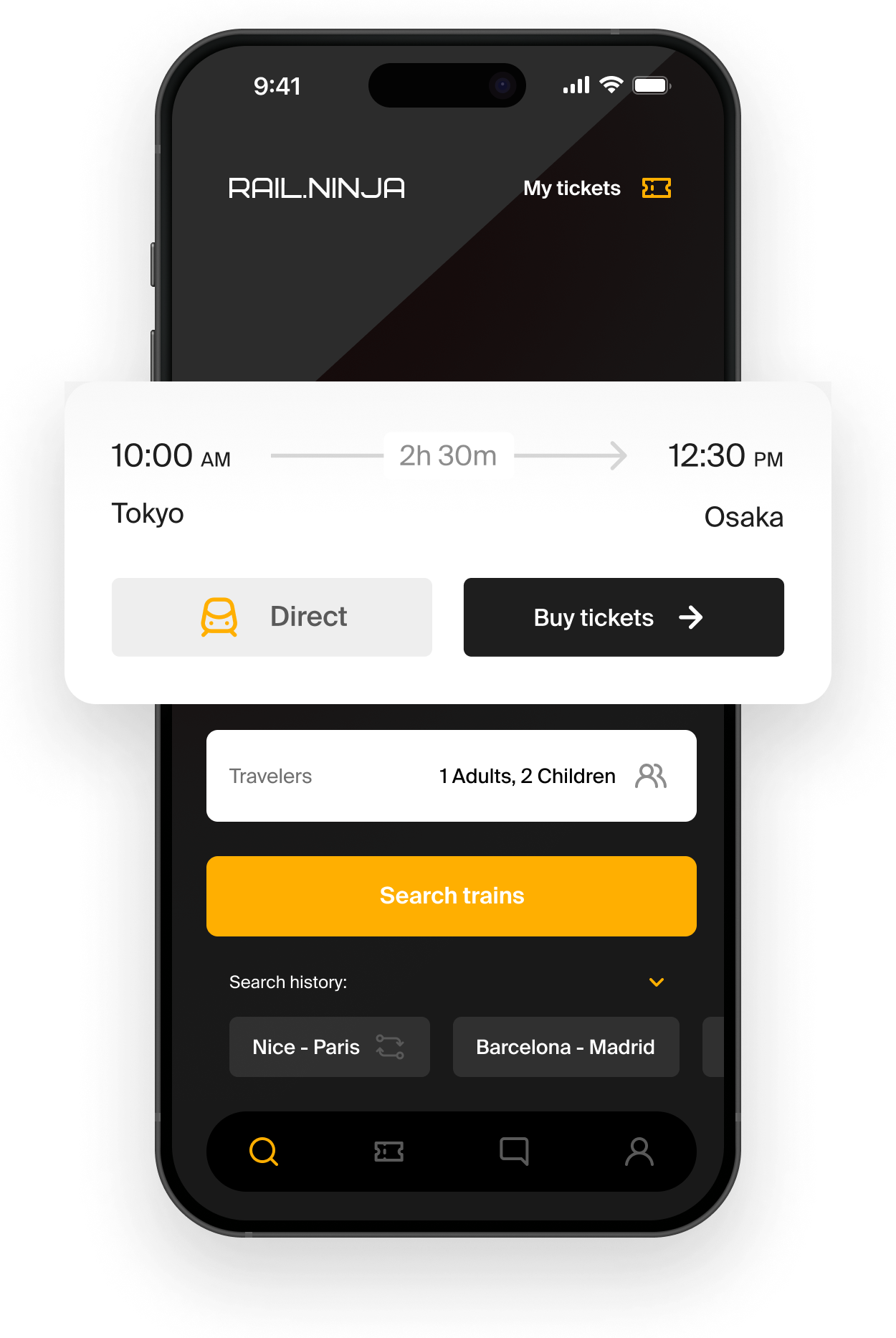
Try the new Rail Ninja App today
Get our free app to book & manage your trips on the go
FAQ
- What is train etiquette like in Japan?
In Japan, train etiquette includes speaking quietly or not at all on trains, not talking on mobile phones, forming an orderly queue on the platform, and giving up priority seats for elderly, disabled or pregnant passengers.
- Is eating allowed on trains in Asia?It varies — eating is generally accepted, and even expected, on Japan's long-distance Shinkansen with bento boxes, but is discouraged on local commuter trains. In China, eating is common on longer journeys but strong-smelling food is discouraged out of courtesy.
- What should I avoid doing on trains in Asia?Avoid loud phone conversations, resting feet on seats, and blocking doors with luggage. In many Asian countries, queuing in marked areas on the platform and letting passengers exit before boarding is expected train etiquette.